
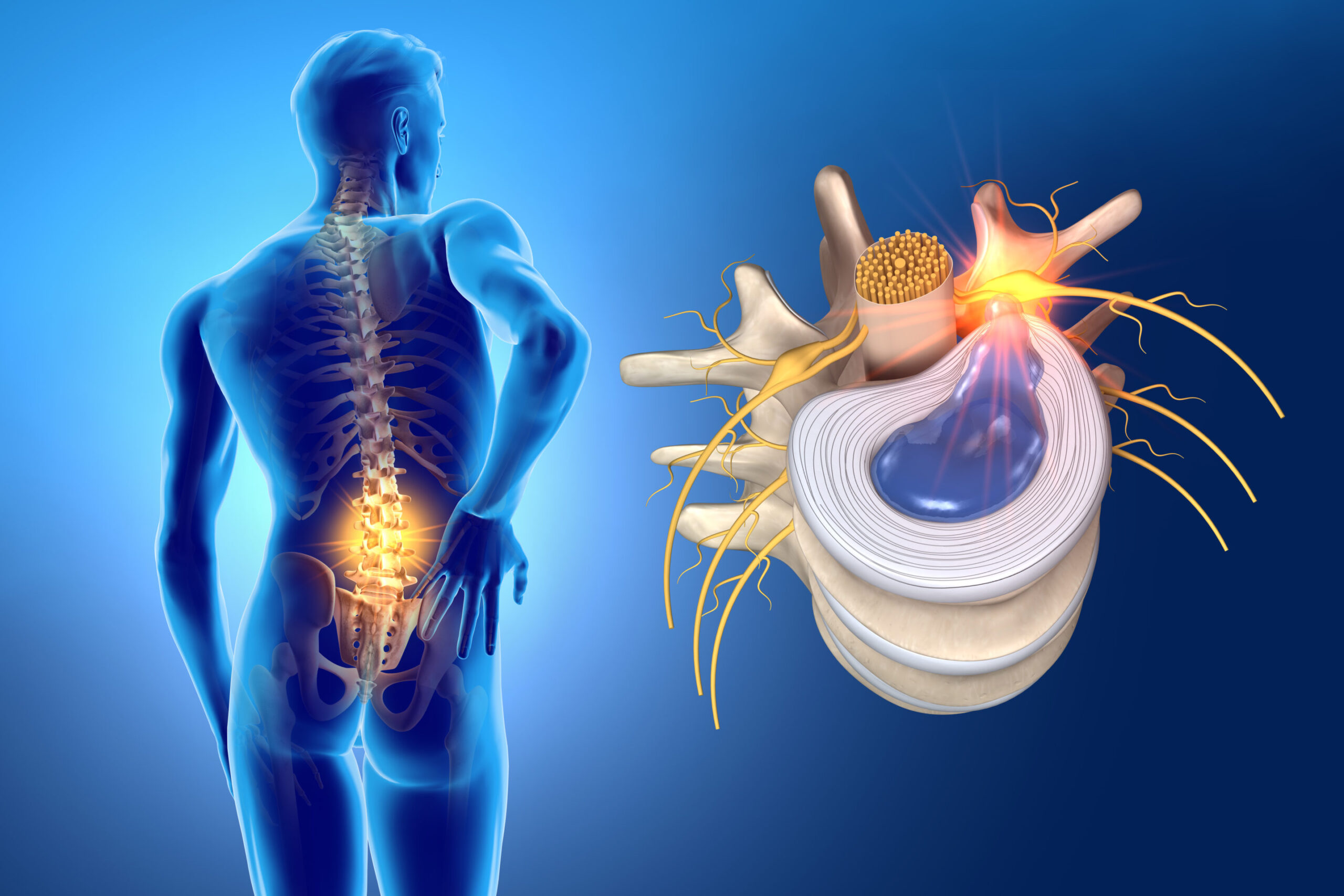
Herniated Disc
A bulging or ruptured intervertebral disc that can cause pain, numbness, and weakness.
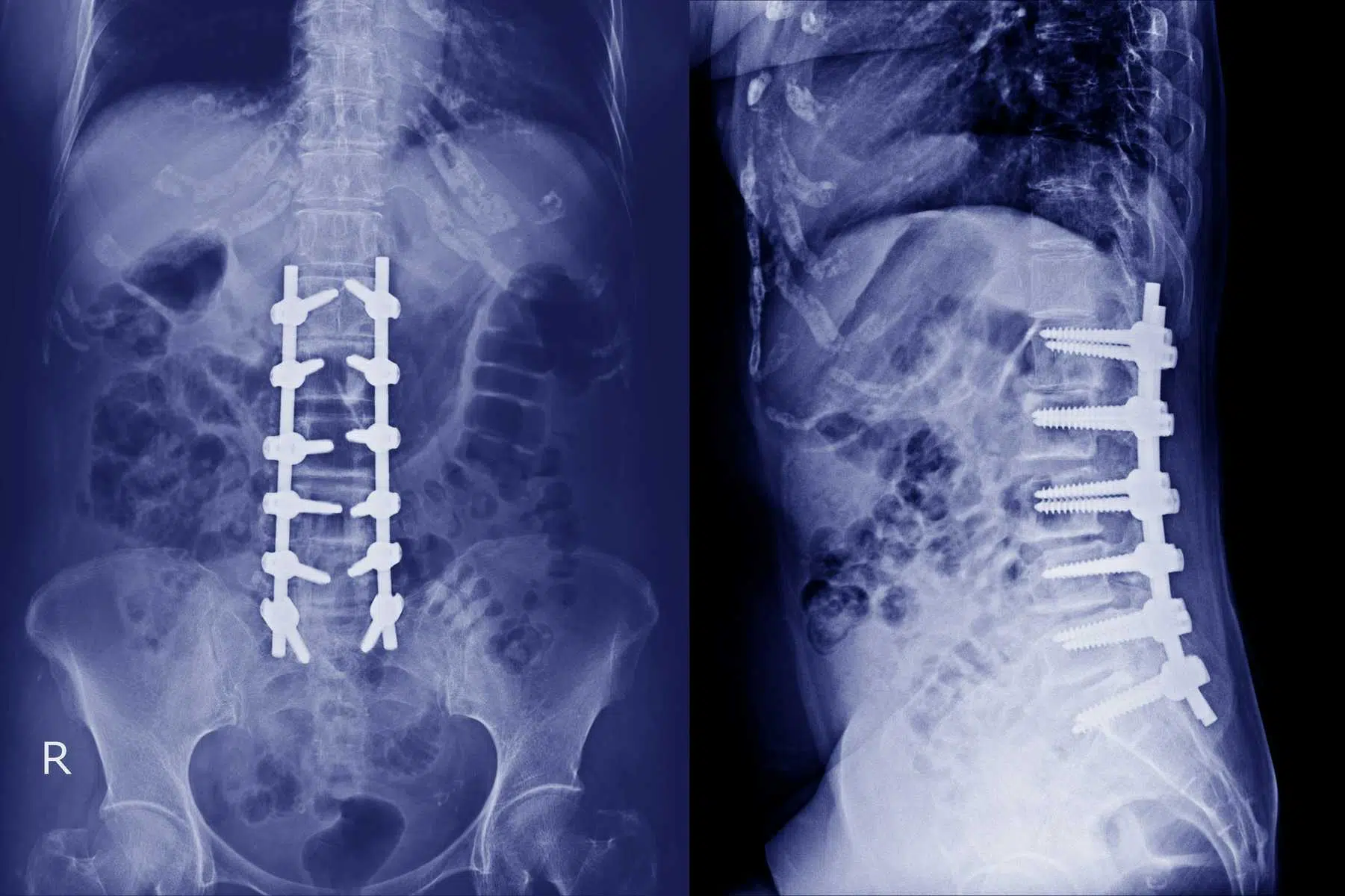
Degenerative Disc Disease
Deterioration of the intervertebral discs due to age, injury, or other factors.
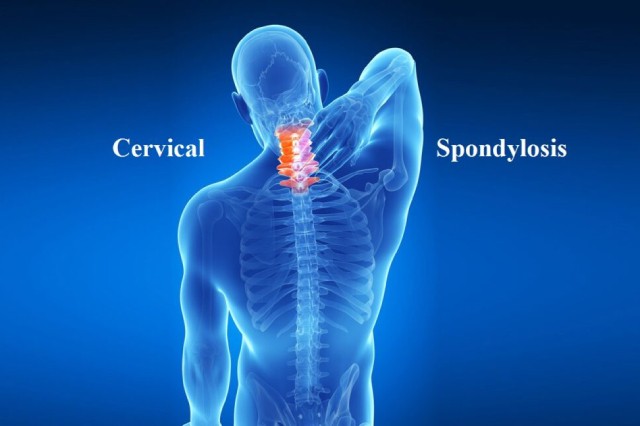
Discogenic Low Back Pain
Pain originating from the discs themselves.
Spondylolysis
A stress fracture in the pars interarticularis, a part of the vertebra.

Spondylolisthesis
Slippage of one vertebra over another, often caused by spondylolysis.
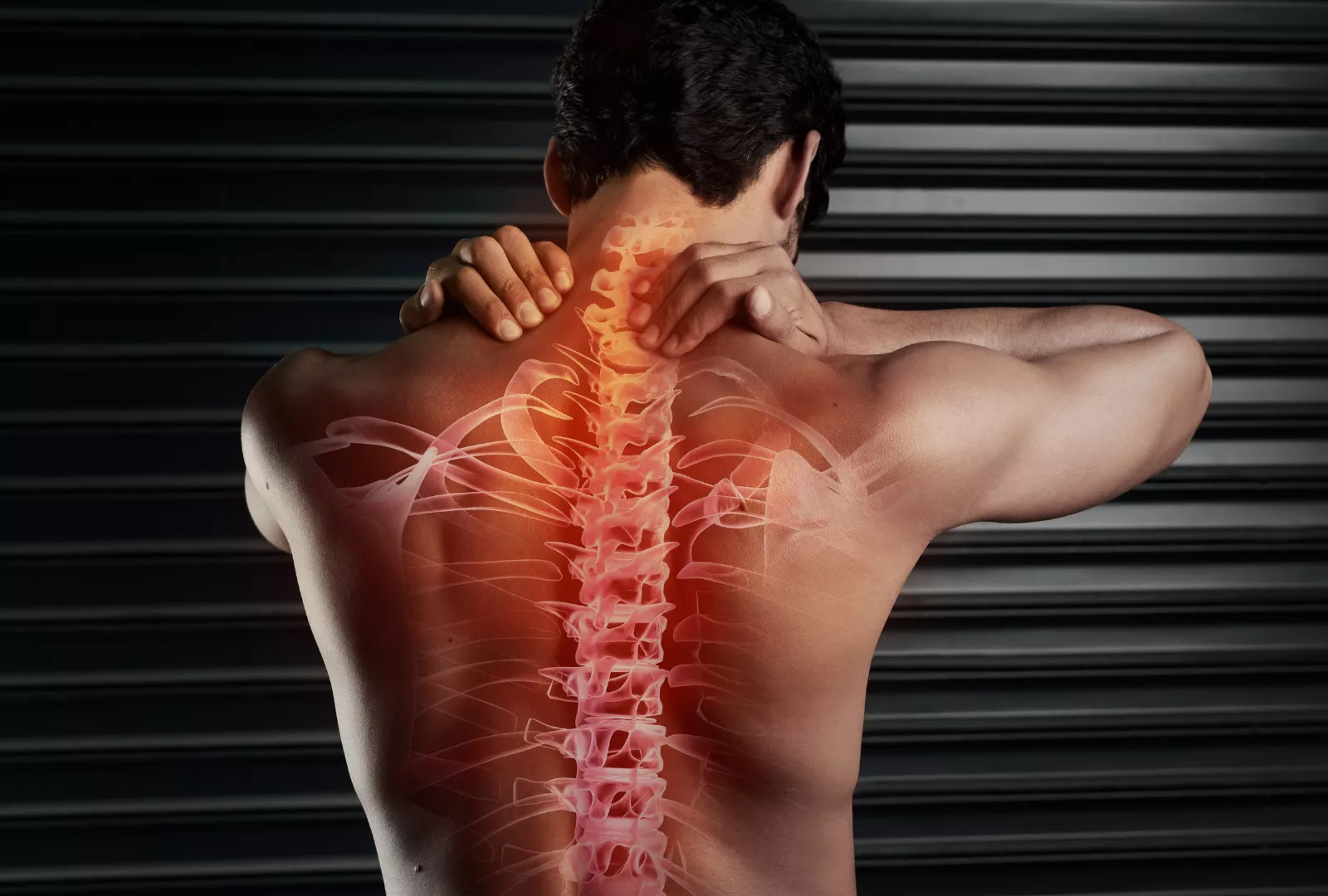
Spinal Stenosis
Narrowing of the spinal canal, potentially compressing the spinal cord or nerves.
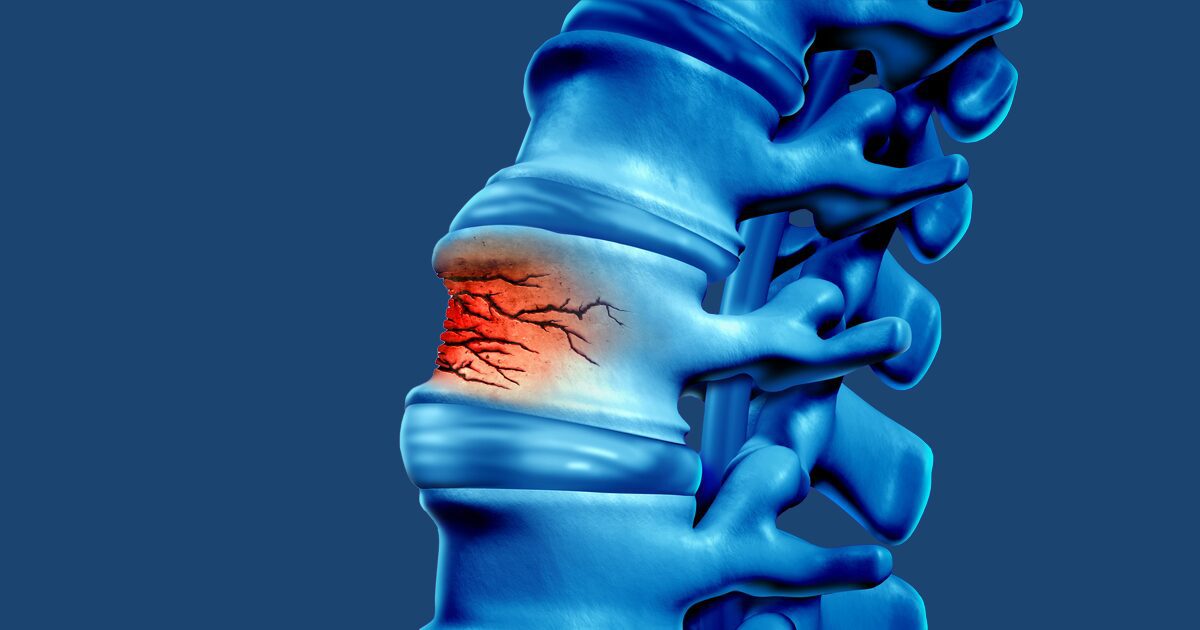
Osteoporotic Compression Fractures
Weakening of the bones due to osteoporosis can lead to fractures, especially in the spine.
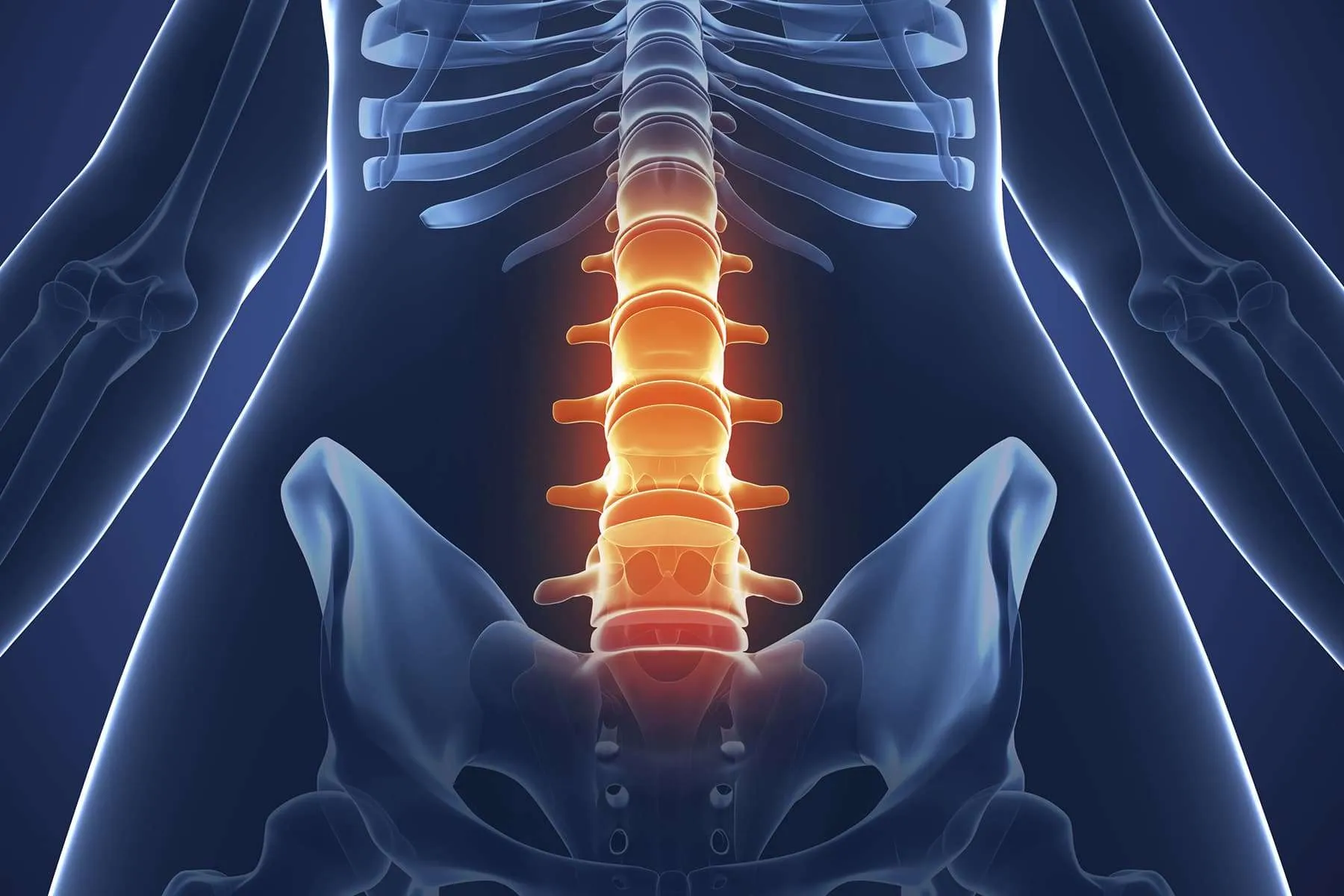
Ankylosing Spondylitis
A chronic inflammatory condition that can fuse vertebrae.
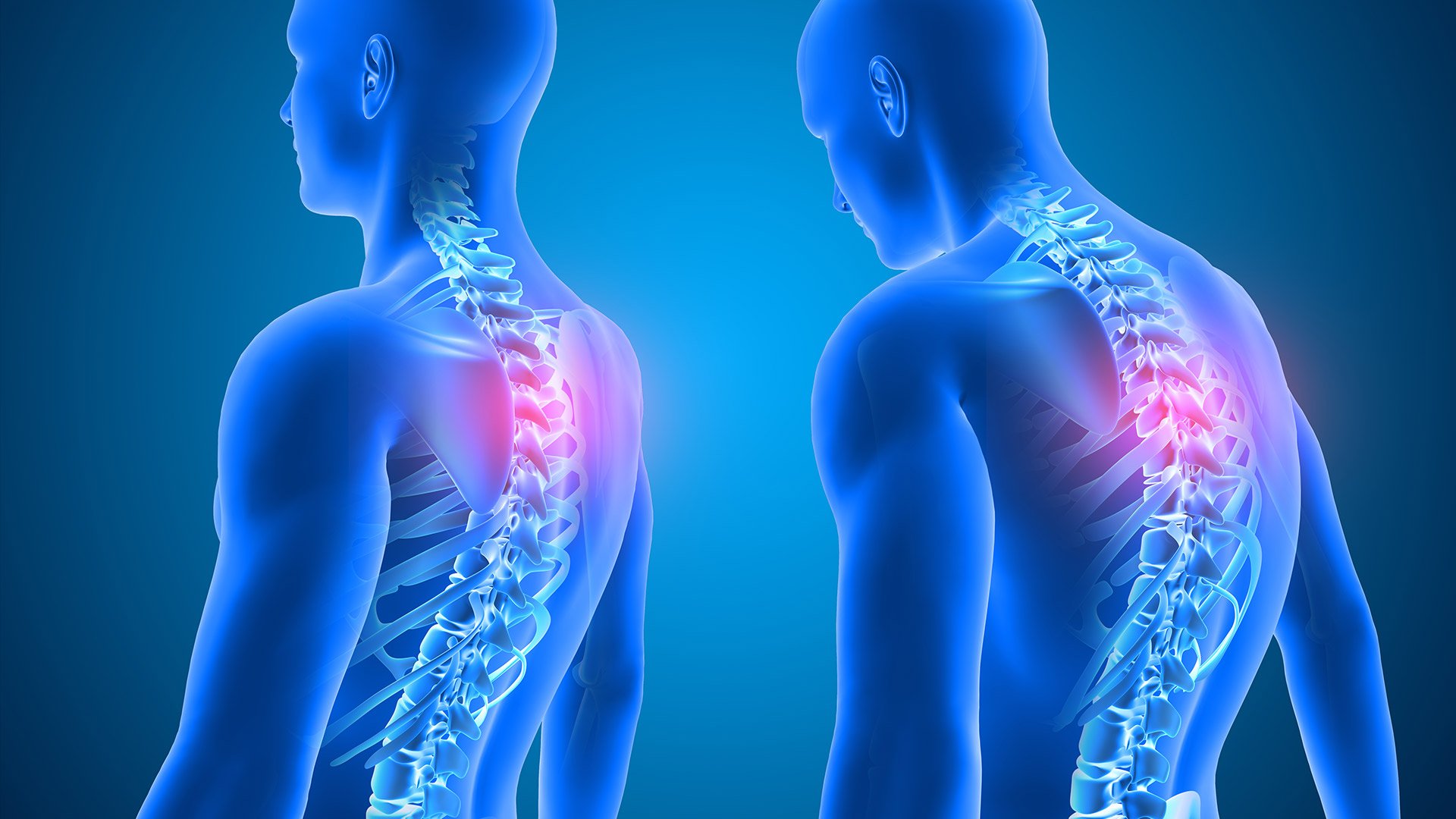
Kyphosis
Excessive curvature of the spine, often leading to rounding of the back.
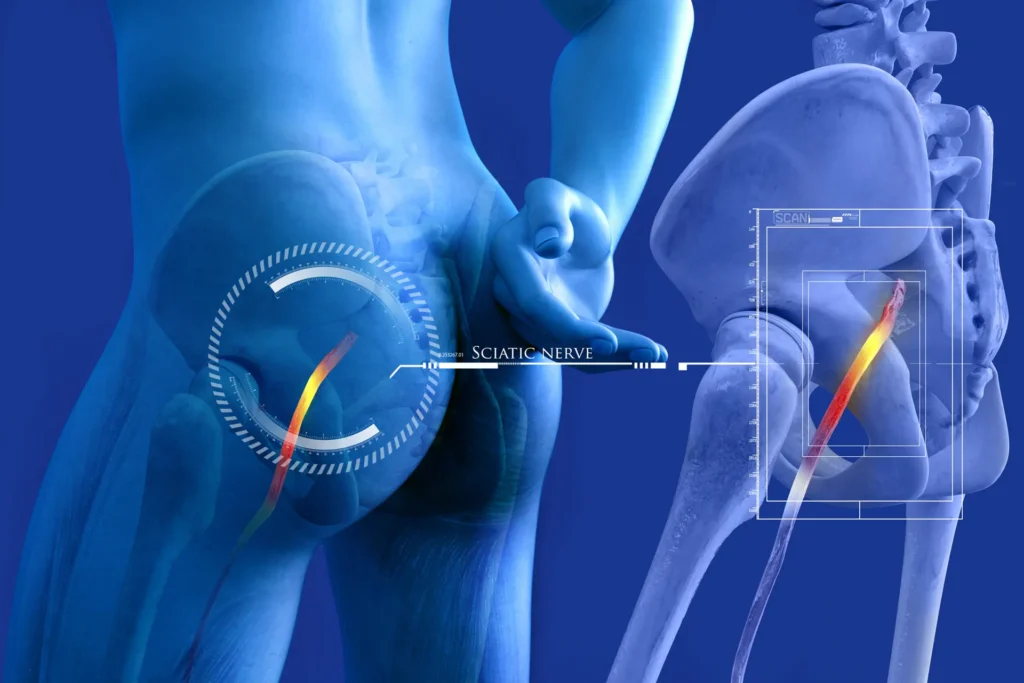
Sciatica
Pain, numbness, or tingling along the sciatic nerve, often caused by a pinched nerve or herniated disc.
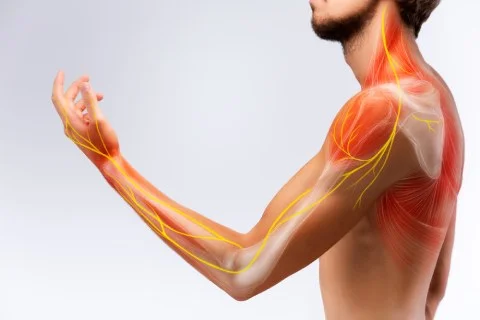
Radiculopathy
Nerve root compression, causing pain and other symptoms.
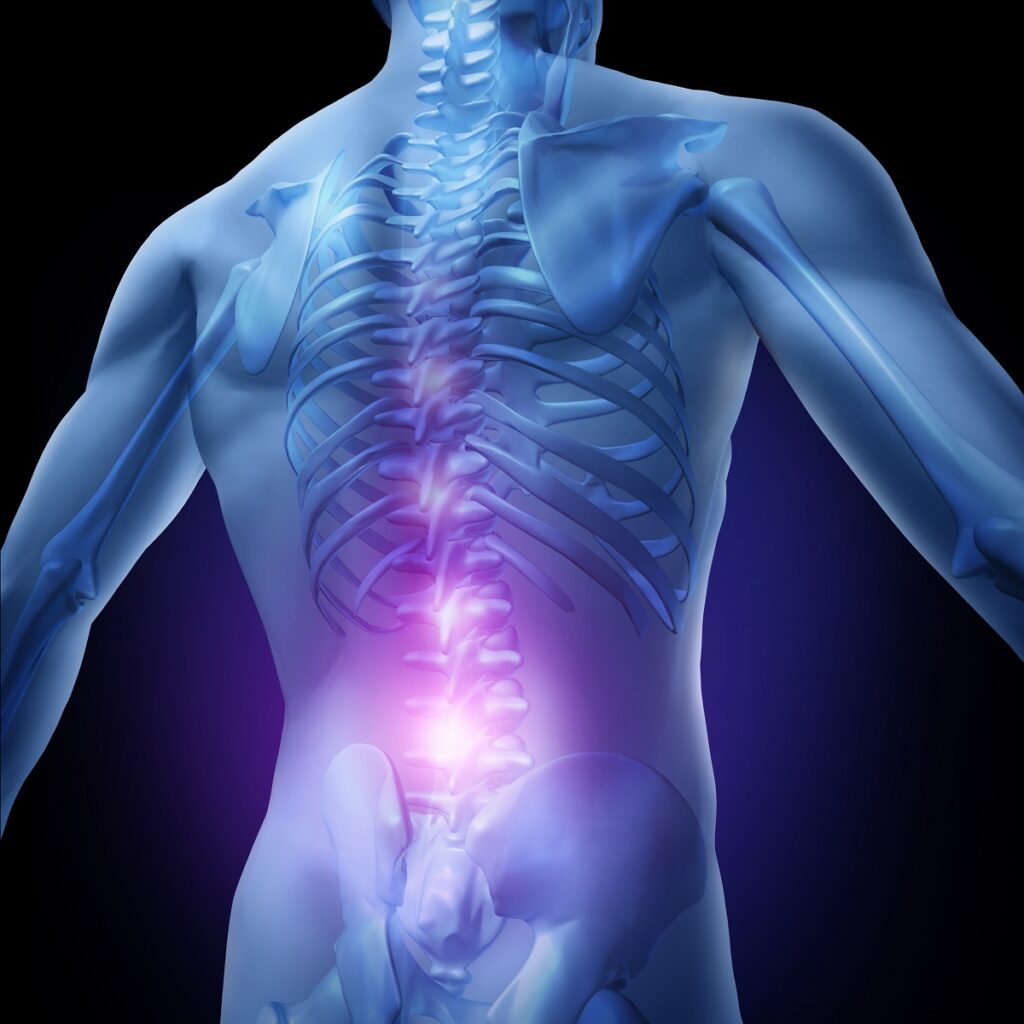
Cauda Equina Syndrome
A serious condition where the nerves in the lower spinal canal are compressed, potentially causing bowel and bladder dysfunction.
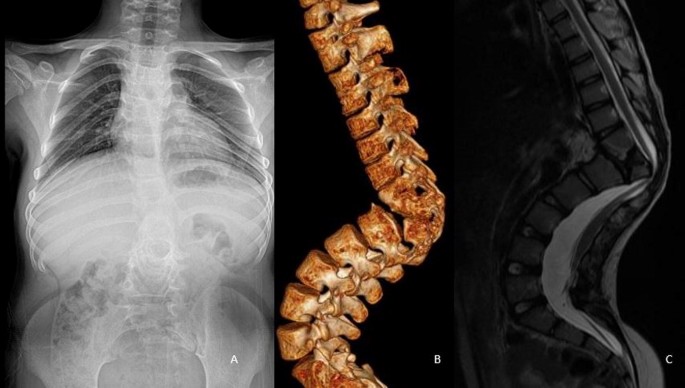
Congenital Spine Deformities
Spinal deformities present at birth, such as spina bifida or scoliosis.
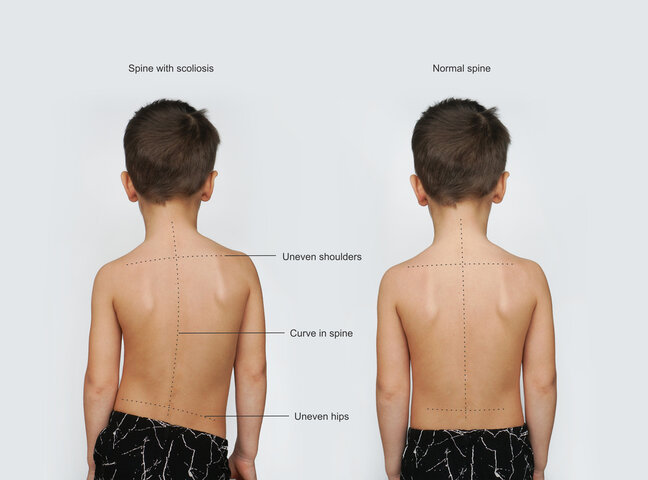
Scoliosis
Curvature of the spine, typically sideways